The short answer
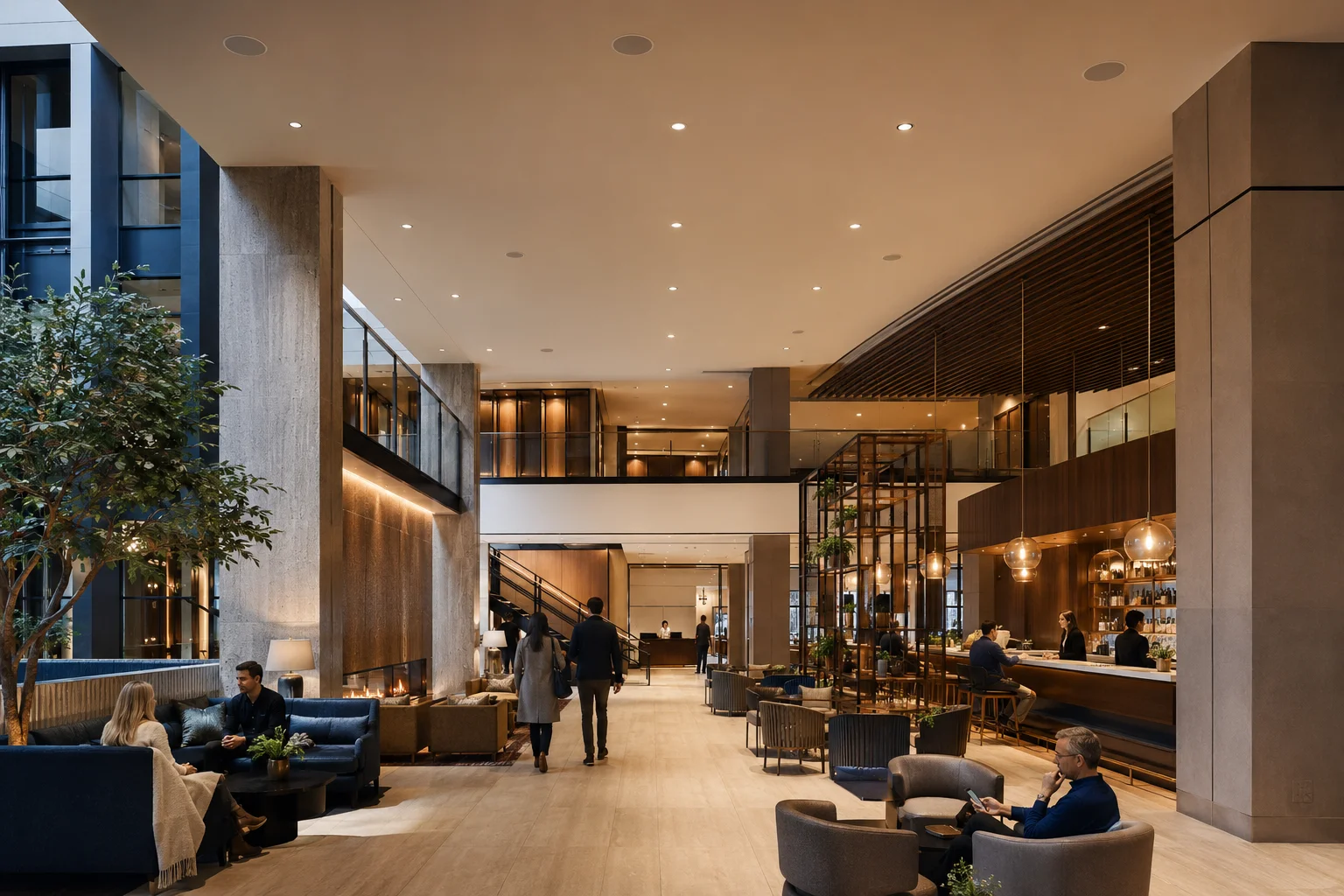
For most large retail, hospitality, conference and public-address environments, a properly designed mono system is the safer and more consistent choice. Every loudspeaker reproduces the complete programme, so a listener does not lose part of the music or message simply because they are standing closer to one side of the room.
That does not mean mono is automatically better, or that stereo is inherently unsuitable. The correct choice depends on how people use the space, where they listen, what the system must reproduce and how the loudspeakers are distributed.
Why stereo sounds impressive—under the right conditions
Stereo uses two related channels to create width, placement and movement across a left-to-right soundstage. In a controlled listening environment, a listener positioned between the left and right loudspeakers can perceive instruments and effects in a convincing spatial image.
The limitation is geometry. Move far enough away from the central listening zone and one channel becomes dominant. In a lounge, cinema or focused presentation area, that may be manageable. Across a supermarket, restaurant, atrium or exhibition floor, listeners are rarely stationary or centred.
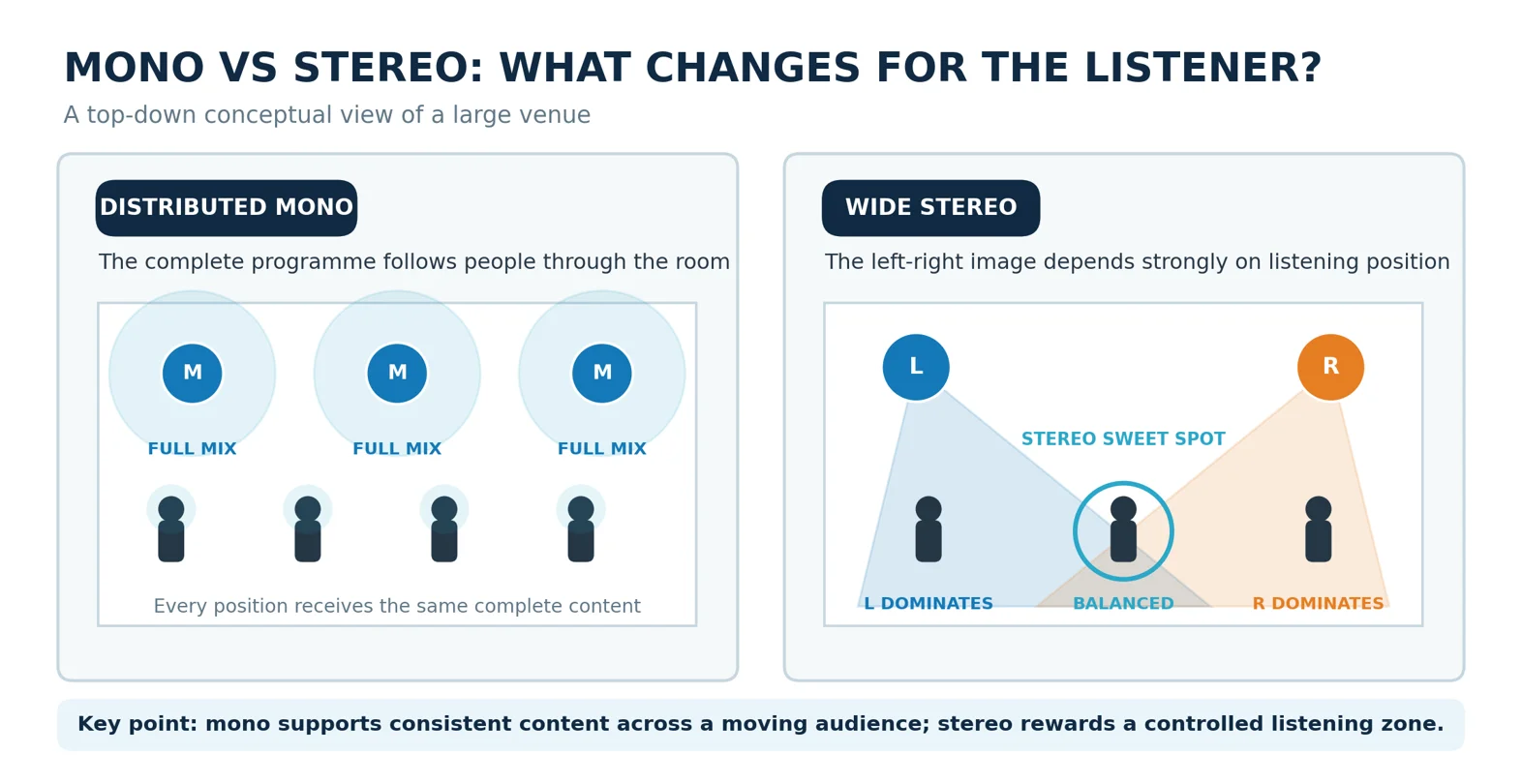 Figure 2. Mono and stereo respond differently to listener position. This is a conceptual guide, not a measured acoustic prediction.
Why distributed mono is common in large spaces
In a mono system, the relevant programme content is combined into one complete signal and reproduced throughout the coverage area. Distributed systems then use multiple loudspeakers, appropriate spacing and suitable directivity to deliver that signal evenly.
- Consistent programme content at every listening position.
- Clearer announcements because speech is not tied to one side of the room.
- More predictable coverage for people who are continually moving.
- Simpler zoning and commissioning in irregular or open-plan environments.
- Less risk that a stereo mix leaves vocals, instruments or effects sounding incomplete near one channel.
The important qualification is that mono does not fix poor design. Loudspeaker spacing, aiming, level, delay, polarity, room acoustics and background noise still determine whether the result is smooth and intelligible.
Mono is not the same as ‘one loudspeaker’
This is a common misunderstanding. Mono describes the programme format, not the number of loudspeakers. A large venue may use dozens of loudspeakers, multiple amplifier channels and several zones while still distributing the same complete mono programme to each relevant area.
Zoned mono can also be finely controlled. A restaurant terrace may run at a lower level than the bar, while announcements remain available in both. A retail entrance, sales floor and fitting area may each need different loudspeaker types or equalisation, even though the core content is mono.
Where stereo can still make sense
Stereo becomes more valuable when the audience has a stable orientation and spends time inside a defined listening area. Examples include:
- A seated presentation or screening area with a clear front.
- A small lounge or premium hospitality zone with controlled seating.
- An experiential retail display designed around a fixed focal point.
- A performance area where spatial imaging is part of the creative intent.
Even then, coverage should be assessed beyond the ideal centre seat. Some projects use stereo in a focused zone and mono in circulation or overflow areas. Others distribute left and right pairs locally so more listeners experience both channels. These are design decisions, not simple equipment settings.
A practical decision framework
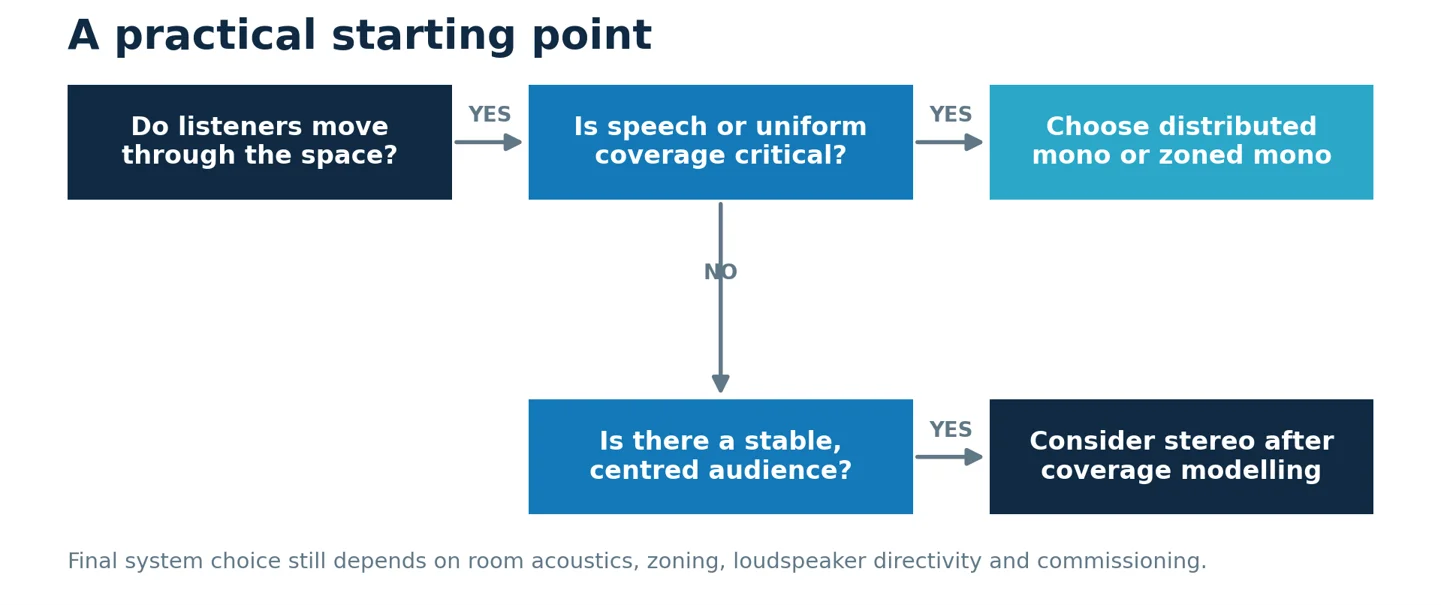 Figure 3. A starting framework; acoustic modelling and on-site commissioning remain essential.
| Project question | Points toward mono | Points toward stereo |
| Listener movement | People circulate freely | Audience remains centred |
| Primary content | Announcements and background music | Critical music imaging or effects |
| Room form | Large, irregular or multi-zone | Defined, symmetrical listening zone |
| Coverage priority | Same content everywhere | Spatial image within a target area |
| Operational simplicity | High priority | Secondary to creative intent |
What matters beyond channel format
Coverage and directivity
The loudspeaker must place useful sound where people are and limit unnecessary energy on reflective surfaces. A mono signal through poorly selected or badly positioned loudspeakers will still create hot spots and dead zones.
Speech intelligibility
For announcements, intelligibility depends on signal-to-noise ratio, reverberation, arrival-time consistency and system tuning. Channel format is only one part of the result.
Level consistency
A comfortable large-space system often uses more loudspeakers operating at sensible levels rather than a few loudspeakers playing excessively loudly. This can improve consistency and reduce the difference between the loudest and quietest areas.
Source compatibility
When stereo music is reproduced through a mono system, the left and right channels must be combined correctly. Simply joining outputs together can damage equipment or create signal problems. Summing should be handled by the mixer, DSP or an appropriate interface. The combined signal should also be checked for phase-related cancellation.
Common mistakes to avoid
- Choosing stereo because it is associated with hi-fi listening, without considering listener position.
- Assuming mono guarantees even coverage without a loudspeaker layout and acoustic plan.
- Placing left and right channels far apart in a space where most listeners hear only one side.
- Combining stereo outputs incorrectly instead of summing them through suitable electronics.
- Ignoring zoning, delay alignment and commissioning after installation.
The best system is the one designed for the space
The mono-versus-stereo question is really a question about the experience the system must deliver. In large spaces, that experience is usually judged by consistency: Can every customer hear the full programme? Are announcements clear? Does the level remain comfortable as people move through the venue?
Where those outcomes are the priority, distributed mono is often the most practical solution. Where listeners are fixed and spatial imaging is important, stereo may be worth the additional planning. In either case, the final result depends on system design, acoustic behaviour and careful commissioning—not on the channel label alone.
Frequently asked questions
Does mono reduce audio quality?
No. Mono removes left-to-right separation, but it does not inherently reduce frequency range, clarity or fidelity. A well-designed mono system can sound excellent.
Can stereo music be played through a mono system?
Yes, provided the channels are summed correctly using suitable mixing or DSP equipment and the result is checked for phase cancellation.
Is stereo ever suitable for a restaurant or retail store?
Yes, particularly in a small, controlled zone. For broad circulation areas, distributed mono is usually more consistent.
Will 360-degree loudspeakers solve every coverage problem?
No single loudspeaker type suits every room. Omnidirectional or wide-dispersion designs can be useful, but ceiling height, reflections, spacing, noise and the listening plane must still be considered.
Plan for the listener, not the specification sheet
If you are planning or upgrading a sound system for a large commercial space, start with the movement of people, the required coverage and the role of speech and music. A site-specific design can then determine the right channel format, loudspeaker type, zoning and control strategy.
Talk to our team about a professional audio solution designed around your space and customer experience.
Source credit: This article was inspired by technical guidance shared by NewTec Design Audio GmbH in its email, “Mono or Stereo? What Really Sounds Better in Large Spaces?” It has been independently rewritten and expanded for publication. NewTec Design Audio GmbH — newtec-audio.com.