Healthcare & Education Automation
Lighting • Automation • Audio & Visual
Tunable White & Human-Centric Lighting
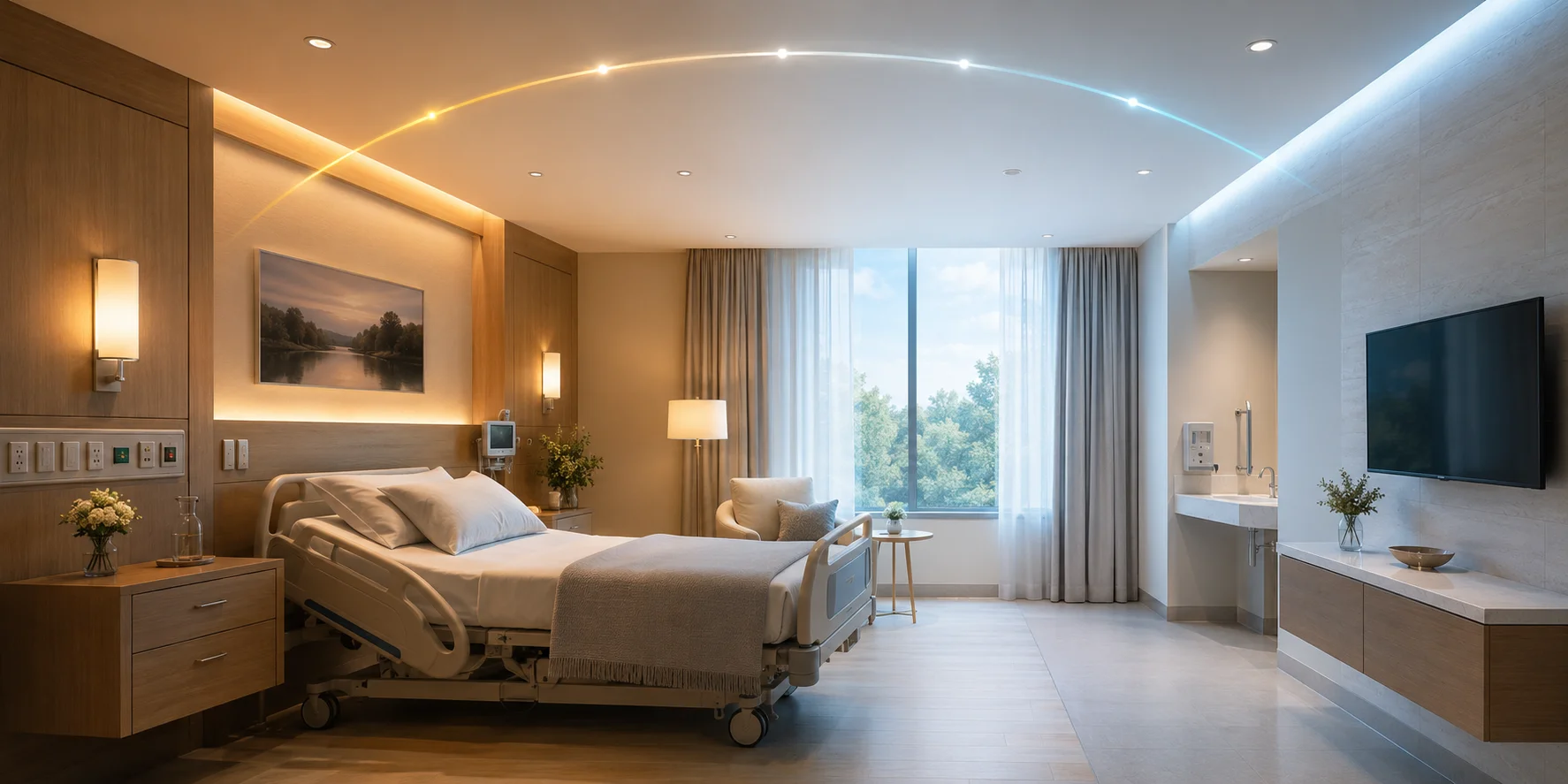
Tunable white systems adjust both the colour temperature and intensity of white light, allowing a space to shift between warm, calming settings and cooler, brighter settings. Automatic daily sequences can follow natural light patterns, while authorised users select scenes for specific activities. In healthcare, this can create more reassuring patient environments and clearer task conditions for staff; in education, it supports flexible settings for focus, collaboration, presentations and rest.
Best suited to: Patient rooms, recovery and aged-care spaces, nurses’ stations, classrooms, libraries, lecture theatres and study areas.
Key benefits
- Adjusts both white-light colour temperature and intensity to suit the time and activity.
- Warmer, lower-intensity scenes can create a calmer evening or low-stimulation setting.
- Cooler, brighter scenes can support alertness, observation and high-focus tasks.
- Scheduled changes can reinforce natural daily light cues where daylight is limited.
- Provides pre-programmed scenes for care, reading, examinations, presentations and quiet time.
- Allows intuitive user control within settings defined for the space.
- DALI-based control can coordinate dimming and colour temperature consistently across fittings.
Intelligent Room Automation
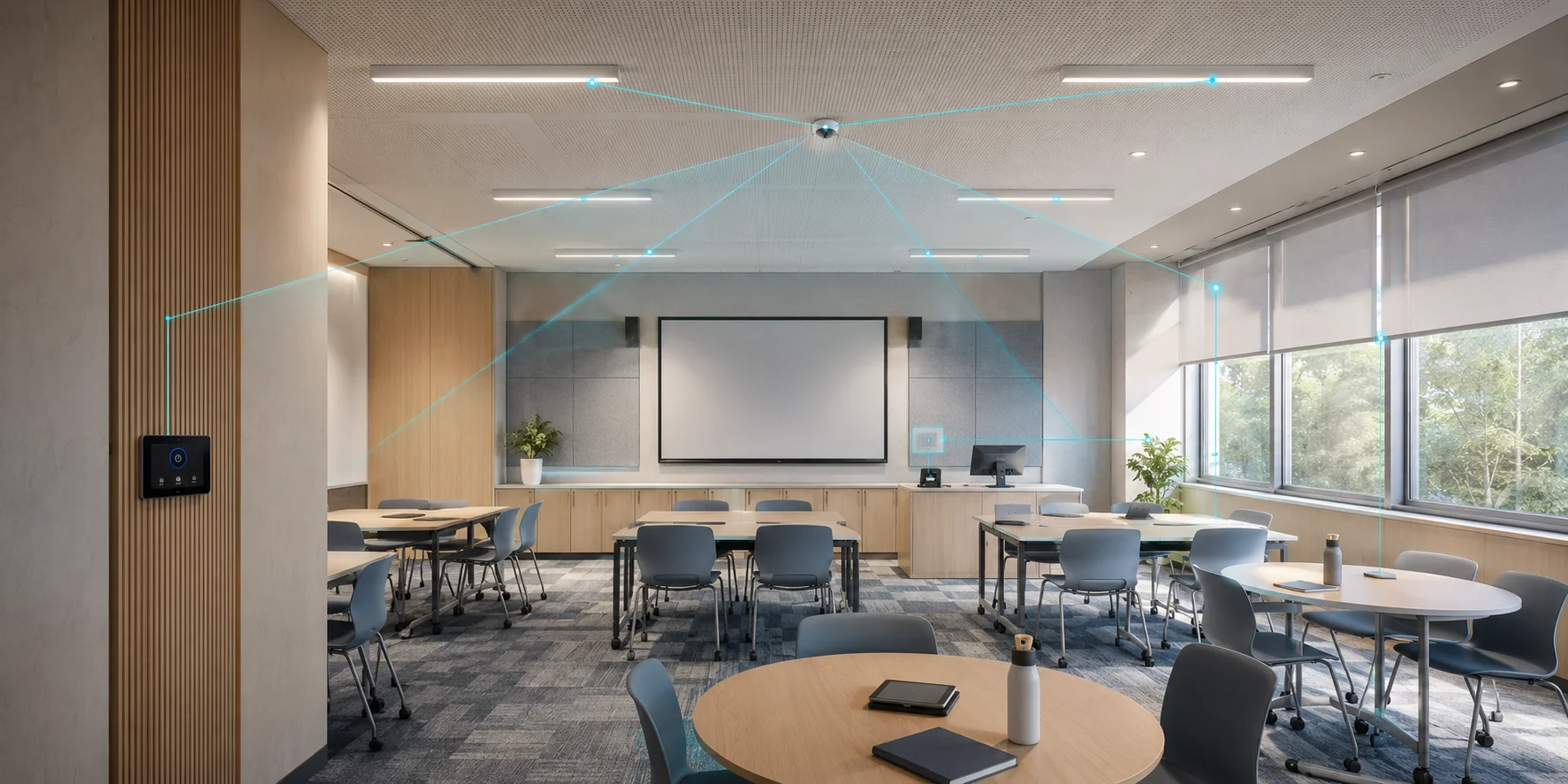
Room-based automation combines addressable luminaires, multisensors and local user controls in a self-contained solution. Occupancy or absence detection reduces lighting when the room is empty, daylight harvesting trims artificial light near windows, and programmed scenes adapt the space instantly. Repeatable templates can be applied across similar rooms while each room retains the settings its users need.
Best suited to: Classrooms, lecture rooms, laboratories, consulting rooms, treatment spaces, patient rooms, staff areas and administration offices.
Key benefits
- Provides simple scene selection for educators, clinical staff and room users.
- Adapts quickly between teaching, presentation, examination, care, night and cleaning modes.
- Occupancy or absence detection prevents lights being left on in empty rooms.
- Daylight harvesting reduces artificial light while maintaining visual comfort.
- Retains local override so authorised users remain in practical control.
- Repeatable room templates simplify commissioning and remain easy to reconfigure as needs change.
- Can coordinate lighting with compatible blinds and audiovisual systems.
Networked Healthcare & Education Automation
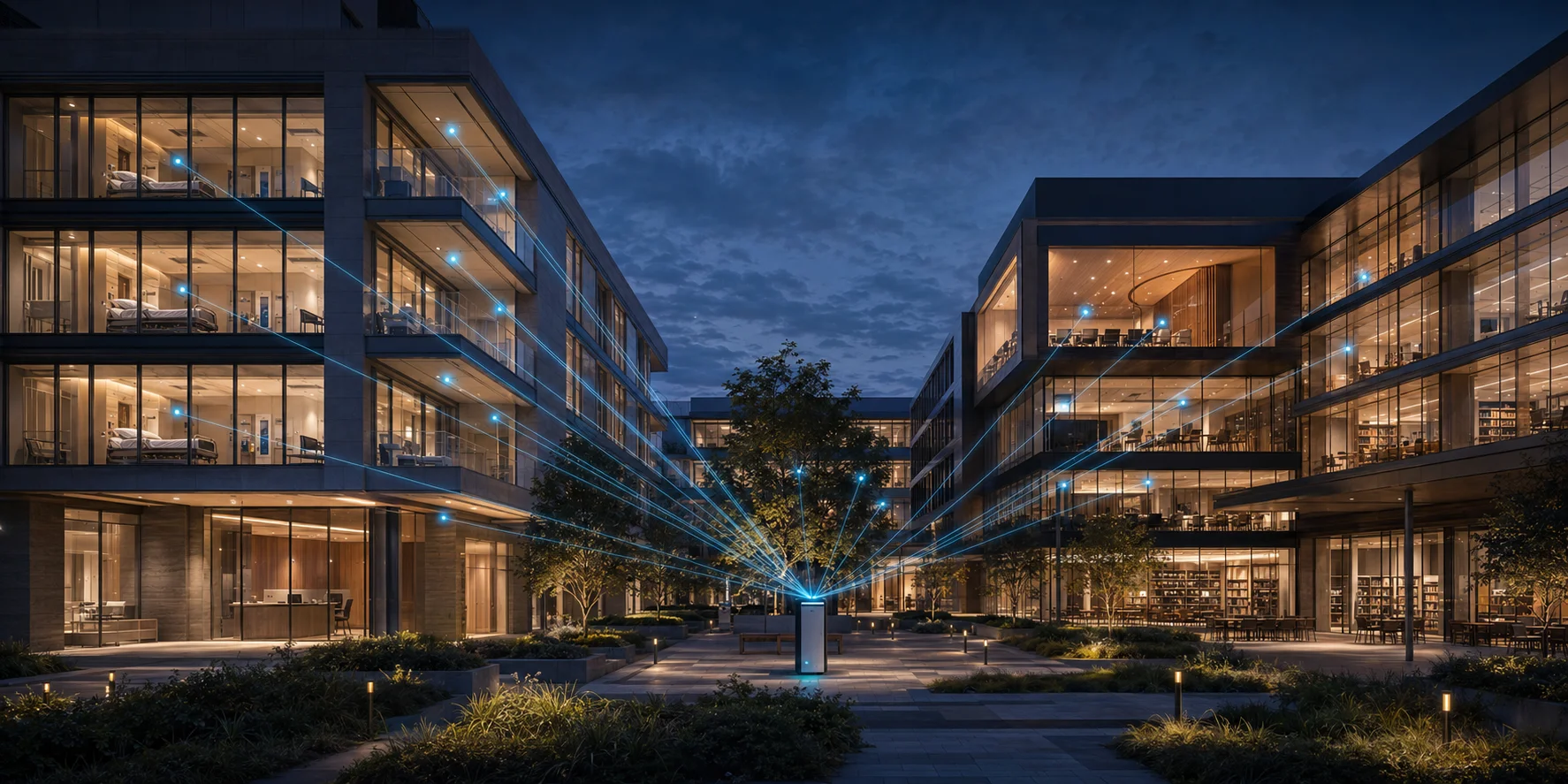
A networked DALI-2, wireless or hybrid system brings rooms, floors and buildings into one centrally managed platform. Facilities teams can monitor system health, lighting energy, occupancy and, where environmental sensing is specified, conditions such as CO2, temperature, humidity and noise. Integration with BMS, HVAC, blinds and AV helps hospitals, schools and campuses respond to actual use while maintaining reliable, consistent lighting.
Best suited to: Hospitals, clinics, universities, schools, research facilities, training campuses and multi-building estates.
Key benefits
- Provides central monitoring, scheduling and scene control across the estate.
- Uses real-time fault alerts and remote diagnostics to reduce disruption and site visits.
- Makes lighting energy use and operating-time data visible for ongoing optimisation.
- Uses occupancy trends to support better room and space-utilisation decisions.
- Environmental data can inform decisions about comfort, air quality and building operation.
- An open DALI-based backbone supports phased upgrades and wider building-system integration.
- Maintains consistent control strategies across rooms, wards, faculties and buildings.
- Can support automated emergency-lighting testing and reporting where specified.